

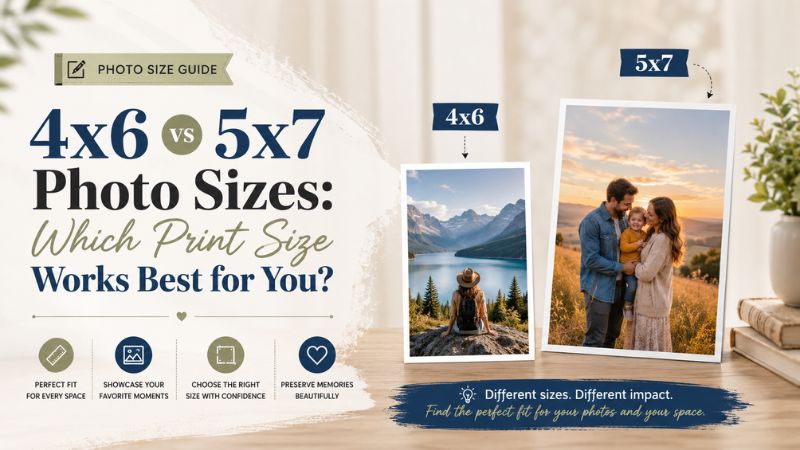

When comparing 4×6 vs 5×7 photo sizes, the main differences center on dimensions, aspect ratio, cropping, framing, and overall visual impact. A 4×6 photo is smaller, cheaper, and ideal for albums and everyday printing, while a 5×7 photo offers a larger, more premium look for frames and displays.
However, because 5×7 uses a different aspect ratio, it often requires more cropping than a standard 4×6 print. This is why choosing the right photo size for the right cause matters more than you think.
To ensure you make the right choice, we have compiled a guide that outlines the exact differences between 4×6 and 5×7, the correct uses, cost differences, and the effects of aspect ratio.
Table of Contents
ToggleUnderstanding Photo Print Sizes
Photo print sizes determine how your digital image appears on paper, including its physical dimensions, aspect ratio, and level of detail. Even a high-quality image can look cropped, stretched, or blurry if the print size doesn’t match its original proportions.
Most standard photo sizes, like 4×6 and 5×7, are designed around common camera aspect ratios, which helps preserve image composition during printing. However, different sizes affect how much of your image is shown, how it fits in frames or albums, and how sharp it appears at different resolutions.
In simple terms, choosing the right photo print size ensures your image looks exactly as you intended, without unwanted cropping or loss of quality.
How Big is a 4×6 photo?
A 4×6 photo is one of the most widely used standard print sizes in photography. It measures 4 inches by 6 inches (10.16 × 15.24 cm) and uses a 3:2 aspect ratio, the same format used by most DSLR cameras and many traditional film cameras.
Because of this natural match with camera output, 4×6 prints usually preserve the original image without heavy cropping. It’s the size most people think of when they picture a “normal photo print”; compact, clear, and easy to store in albums or frames.
In pixel terms, a high-quality 4×6 print at 300 DPI requires: 1200 × 1800 pixels
This makes it suitable for both everyday printing and high-quality photo reproduction. Let’s get to know more about it in detail:
4x6 Photo Dimensions
The exact dimensions of a 4×6 photo are:
- In inches: 4 × 6 inches
- In centimeters: 10.16 × 15.24 cm
- In millimeters: 101.6 × 152.4 mm
- In pixels (300 DPI): 1200 × 1800 pixels
These measurements make it one of the most universally supported photo print formats across printing labs, online services, and home printers.
Because of its balanced proportions, the 4×6 size works well for both portrait and landscape orientation without losing image quality when properly prepared.
Aspect Ratio of 4x6 Photos
The aspect ratio of a 4×6 photo is 3:2, meaning the width is 1.5 times the height.
This ratio is important because it directly affects how your image fits into the print frame. Most DSLR cameras and many professional cameras shoot in 3:2, which is why 4×6 prints often require little to no cropping.
However, smartphones typically use a 4:3 ratio, which means:
- Some cropping is required when printing to 4×6
- Edges may be trimmed during printing if not adjusted manually
Understanding this ratio helps you avoid unexpected cropping and ensures your printed photo matches what you see on screen.
Common Uses of 4x6 Prints
A 4×6 photo is extremely versatile and is used in both personal and professional settings. It remains the default print size for everyday photography because it is affordable, compact, and easy to handle. Common uses include:
- Family photo albums and scrapbooks: it’s the most popular use case due to the perfect storage fit
- Travel photography prints: as it’s easy to collect and organize
- Greeting cards and postcards: widely used for personal messaging
- Event photography: weddings, birthdays, school events
- Tabletop frames: fit standard desk and shelf frames
- Photo gifts and keepsakes: small, meaningful prints for sharing
- ID-style or portfolio prints: compact professional presentation
Because it fits so many everyday needs, 4×6 has become the default “standard photo size” worldwide.
Pros & Cons of Using 4x6 Photo Size
Like any print format, 4×6 has its strengths and limitations depending on how you plan to use your photos.
Pros
- Standard industry size: This photo size is supported by almost all printers and labs
- Affordable printing: It is considered